Editorial review: Async Innovations Engineering Team. Technical and market-sensitive claims are reviewed against primary documentation where available.
Next.js 14 Was Important, but It Is No Longer the Current Major
N...Next.js 14 Was Important, but It Is No Longer the Current Major
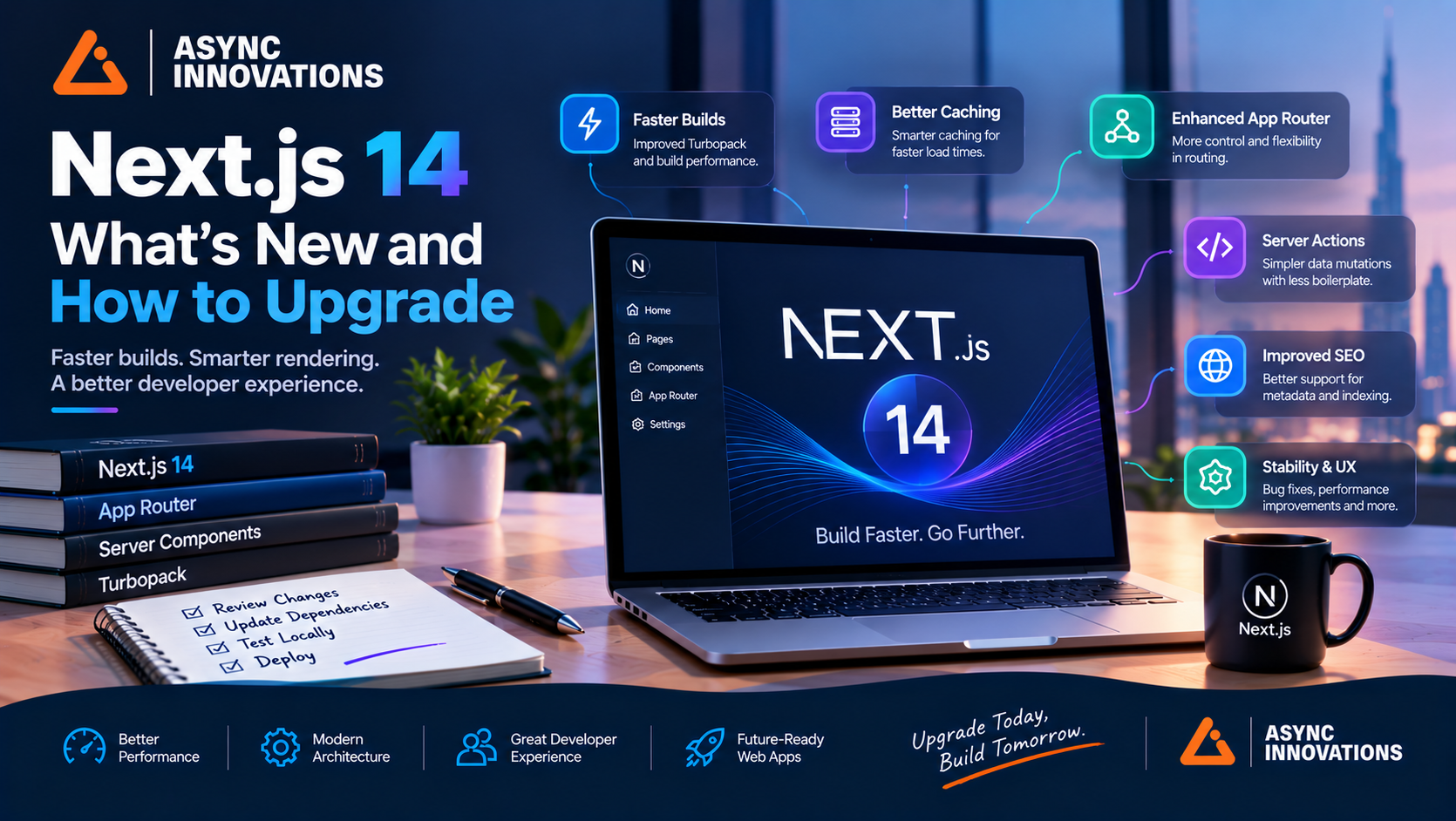
Next.js 14 introduced stable Server Actions and major Turbopack development improvements. The original Next.js 14 release announcement reported up to 53.3% faster local server startup and up to 94.7% faster Fast Refresh updates in Vercel's test application. Those figures are vendor benchmarks for that environment—not a guarantee for every application.As of October 2026, Next.js 16 is the active LTS line and Next.js 15 is in maintenance LTS. The official Next.js release feed lists current releases and security updates. Teams still running 14 should therefore treat this article as historical context and plan an upgrade based on their dependencies and deployment environment.
What Next.js 14 Changed
Server Actions: became stable, enabling server-side mutations to be invoked from React application flows without manually creating an API route for every interaction.Turbopack: significantly expanded development support, although its capabilities have continued to evolve in later Next.js releases.
Partial Prerendering: appeared as a preview direction for combining static shells with streamed dynamic content.
How to Upgrade Safely in 2026
Do not jump major versions based only on feature lists. First inventory routing, middleware, caching, image handling, custom webpack/Turbopack configuration and third-party packages. Read the migration guidance for each major version you cross, update in a branch, run type checking and production builds, execute critical user journeys, and review the current security release before deployment.For an older production application, the objective is not “use the newest framework at any cost.” It is to move to a supported release while preserving behavior, performance and rollback options. If the upgrade is part of a wider modernization, see our web application development work.