Editorial review: Async Innovations Engineering Team. Technical and market-sensitive claims are reviewed against primary documentation where available.
API-First Is a Contract Decision, Not Just a Backend Style
For a ...API-First Is a Contract Decision, Not Just a Backend Style
For a SaaS product that expects multiple clients, integrations or partner access, defining the API contract early can reduce ambiguity between frontend, backend and integration teams. It does not mean every product needs a public API on day one; it means important service boundaries are designed deliberately rather than discovered after the product is already coupled together.The OpenAPI Specification provides a language-agnostic description format for HTTP APIs so humans and tooling can understand an interface without reading its implementation.
Where API-First Helps
Parallel delivery: teams can work against an agreed contract and mocks before every backend endpoint is complete.Integration readiness: authentication, versioning, pagination, errors and rate limits are considered before external consumers depend on them.
Testability: contracts can drive validation, generated clients and automated compatibility checks.
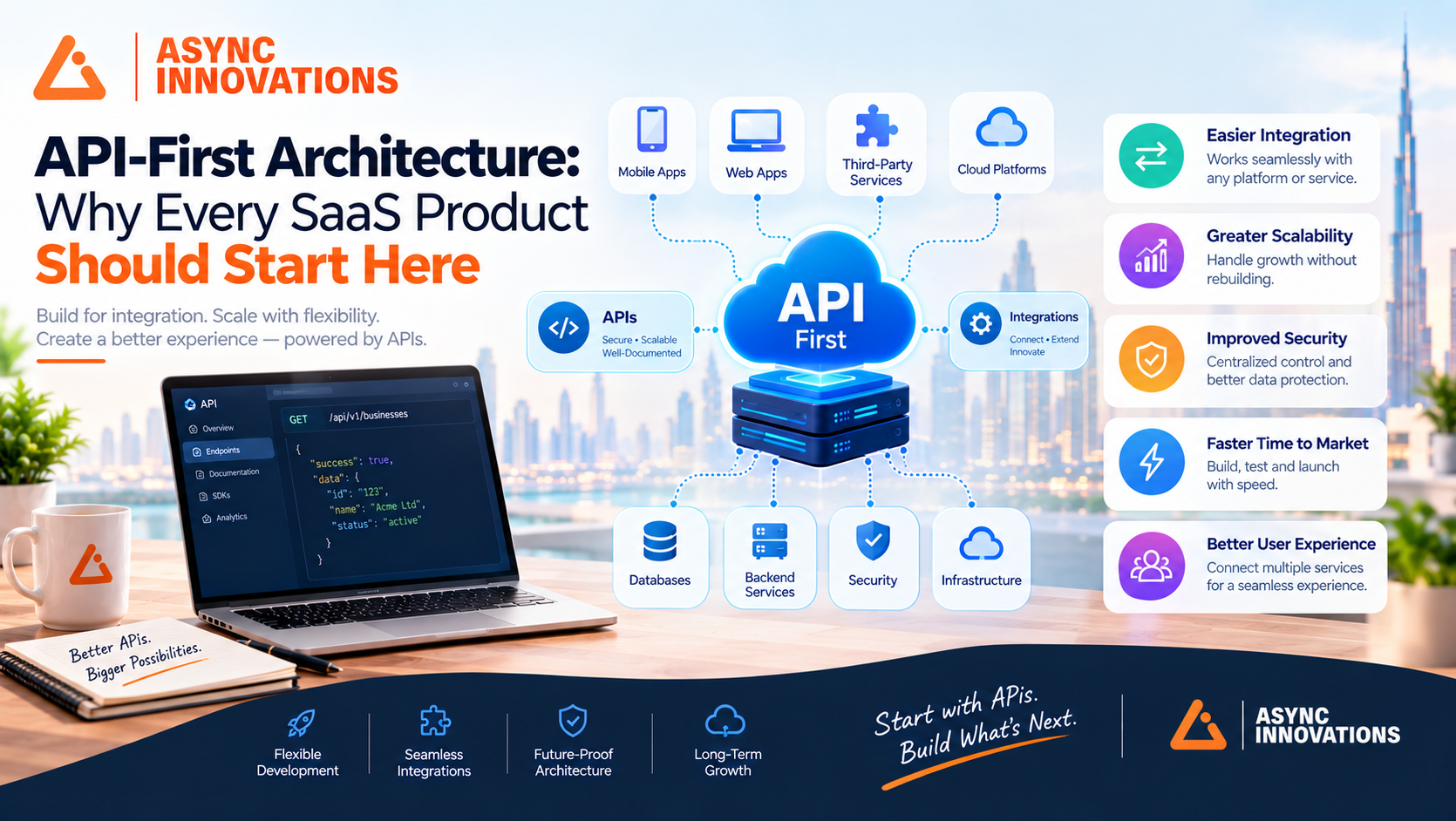
Product flexibility: web, mobile and partner experiences can share capabilities without duplicating business logic.
What API-First Does Not Solve
A specification does not automatically create good domain boundaries, secure authorization, idempotent operations or reliable observability. Those remain engineering responsibilities. Avoid unsupported claims that API-first automatically reduces a project by a fixed percentage; the benefit depends on team structure, integration needs and product complexity.A Practical Starting Sequence
Define the domain and consumers, draft the contract, agree authentication/error conventions, review the contract with frontend/integration teams, generate mocks or clients where useful, implement contract tests, then version deliberately as the product evolves.For products designed around integrations and multiple interfaces, connect this approach with our SaaS development and API & cloud development capabilities.